Why did I want one?
I had decided very early on that I wanted to get a second opinion. When I was initially diagnosed with Ductal Carcinoma In Situ (DCIS), everything I read said there were several factors that made diagnosing DCIS tricky. First, there is a possibility for misdiagnosis and people misidentifying DCIS for other normal or benign breast lesions (something we hope happens). Conversely, people could miss micro invasion in the DCIS or mistake DCIS for other serious breast lesions that would require different treatment. In addition to diagnosis considerations, it seems like it is universally recommended to get a second opinion. Not because your doctor isn’t good or doesn’t know what they are doing, but second opinions could present the same information in a different way that resonates with you and it can be comforting to get consensus around the recommended treatment. For all of these reasons, I decided to proceed with getting a second opinion, but I chose to wait until after my lumpectomy.
Who I chose for my second opinion
I decided to get my second opinion from Memorial Sloan Kettering (MSK) because of their experience. They are one of the preeminent breast cancer research institutions and I found their pathology website extremely useful. For me in particular, I wanted to have my tissue and slides sent to someone who routinely see lots of breast tissue and provides many second opinions. My doctor’s office reached out to them to send paperwork, but this is something that anyone could pursue on their own by contacting whatever institution they want to get their second opinion from. I also chose MSK because they are particularly focused on young women diagnosed with breast cancer and I wanted an opinion of someone who works with and focuses on my particular situation.
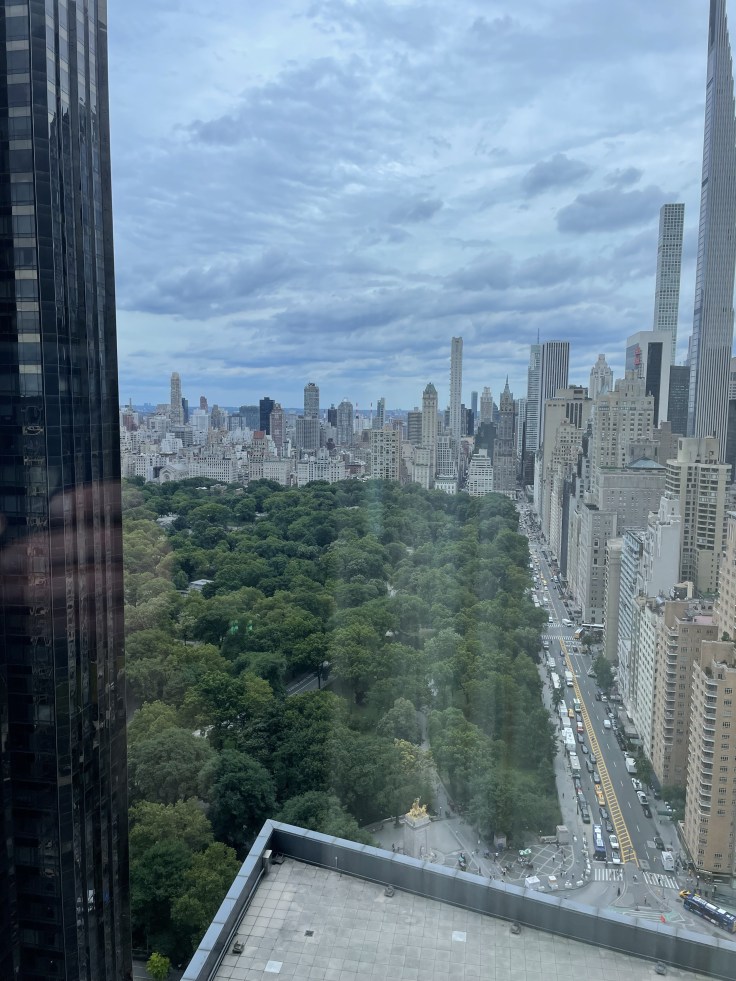
After the COVID pandemic, there were a lot more Telemedicine options. Unfortunately, I needed to travel to New York to get the second opinion because none of their providers had medical licenses in Maryland. My husband and I decided to travel to New York City to get my second opinion and to make a little bit of a trip of it before my chemotherapy would start a week later. The really funny thing is that the oncologist I met with ended up having to be out of town, so I ultimately did a telemedicine appointment. However, I was able to do it because I was in the state of New York when I held my appointment! I felt kind of silly as I took the appointment from my hotel room, but at least we had a really awesome view!
Traveling to New York
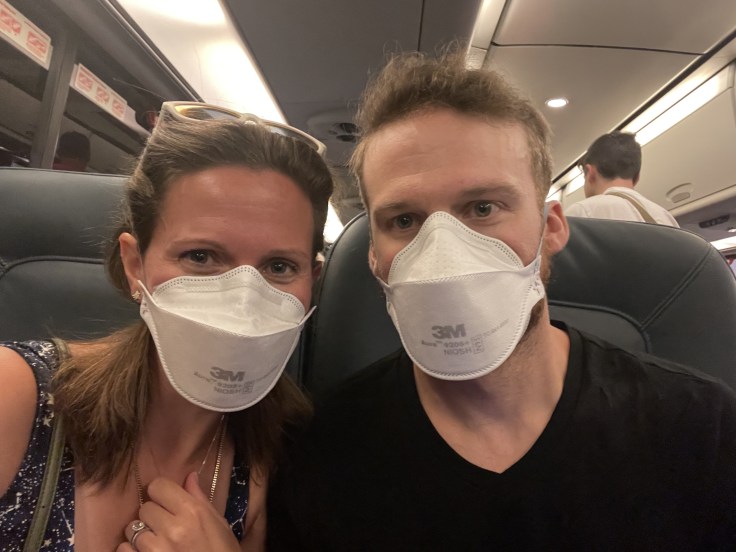
We decided to take the train, because that is just such a convenient way to get to New York from Baltimore. We made sure to wear our masks to avoid any delays that getting COVID would cause for my procedures and treatments! I have heard so many women who are currently undergoing treatment having to delay their infusions because of a COVID diagnosis. I really don’t want that to be me!
The actual second opinion
I met with Dr. Shari Goldfarb from MSK, who is one of the two program directors for Young Women with Breast Cancer. She was very wonderful to talk with. My whole conversation with her centered around her experience specifically working with young women, which was exactly what I was hoping. The good news from our conversation was that the pathology report of my lumpectomy confirmed that diagnosis (so much for my hope of a “you don’t have breast cancer!”) and she recommended the exact same treatment as my oncologist here in Baltimore (Weekly Taxol + Herceptin for 12 weeks, then Herceptin for a year every three weeks). We actually also have a family friend who is a surgical oncologist and he recommended the exact same treatment regimen, so I technically have three opinions that suggest the same course of treatment.
She also talked much more strongly about considering fertility preservation options than other providers I’ve met with. She was more adamant that young women should consider egg harvesting because she has seen lot of women regret not keeping the option open. While Zoladex and Lupron help to try and preserve fertility and ovarian function, it is not 100% and could depend on a lot of other factors related to your natural fertility. However, I know that it is not going to be recommended that I try to get pregnant for two years following my diagnosis, which will mean I’m going to be nearly 38 years old and wouldn’t actually deliver the child until I’m 39. But anyone who has received a recent diagnosis of breast cancer should look into their fertility preservation options and it should potentially be one of the first things you do to ensure you keep your treatment moving at a pace that makes you comfortable. Dr. Goldfarb mentioned that many times they can do at least one round of egg harvesting in 10 – 14 days.
Finally, the only other aspect of the treatment regimen that I haven’t decided with my current oncologist is whether or not to take hormone/endocrine therapy (also referred to as aromatase inhibitors or ovulation suppression). Dr. Goldfarb says it is standard for them to recommend the hormone therapy at MSK for anyone who has more than 2-3% of their tumor positively express estrogen or progesterone receptors. I will discuss that with my current oncologist, but I won’t be taking that for at least 12 weeks from now, so we have time to discuss and make a decision.
The only slightly bad news I received from my second opinion was that their pathologist saw micro invasion in my original biopsy from early April. While that doesn’t really matter because we arrived at the same place ultimately, it would have meant that by the end of May I would have had both my lumpectomy and sentinel node procedure, which means that probably 2 weeks after that surgery I would have had all the information necessary to proceed with treatment. It also means I would have met with an oncologist earlier on and probably would have looked to start treatment by the middle or end of June. It didn’t exactly save a ton of time, but it would have saved a few weeks.
My takeaways and advice
Given my experience thus far, the main advice I’d give to other women who find themselves in this same circumstance is to definitely seek a second opinion and to initiate it as soon as you get the diagnosis from your biopsy. It took time to get all of the paperwork, go through the process of the second institution and to get scheduled for my appointment. In my situation, it would have changed how many surgeries I had to do and would have slightly sped up my timeline. I’m glad I went through the process of getting a second opinion and now I feel like I can move forward with my treatment with a considerable amount of confidence.


Again, Christina, you amaze me. Most women, faced with a breast cancer diagnosis ( no matter their age or level of education) would not even consider a second opinion. I will do my best to promote a 2nd opinion if necessary.
LikeLike